If you're PCSing to F.E. Warren this year, you already know the good news. Basic Allowance for Housing at the base jumped 7.2 percent for 2026, one of the larger increases among Air Force installations, and dependents pull in another 25 percent on top of that. Pair that with Wyoming's lack of a state income tax and a Laramie County property tax rate hovering around 0.61 percent, and the math on paper looks better than almost anywhere else you could have drawn orders.
Here's the part that paper doesn't show you: Cheyenne had roughly 22 homes actively listed for sale against 864 closings over the trailing six months as of July 2026. A bigger housing allowance doesn't create more houses. It just means more people with more money are competing for the same thin shelf, and this year that shelf is about to get a lot more crowded, because the biggest employer in southeast Wyoming is in the middle of a construction program measured in billions of dollars.
What the Raise Actually Buys
The specifics matter more than the headline number. For 2026, enlisted members with dependents at F.E. Warren range from about $1,539 a month at E1-E4 up to $2,520 for an E9. Officers with dependents run from roughly $1,725 for an O1 to $2,937 for an O6. An E-5 with dependents draws about $1,773. Every dollar of that is tax-free, and a VA loan on top of it requires zero down and no PMI, which is why military homeownership pencils out so well here compared to duty stations near major metros.
The 2026 conforming loan limit for Laramie County sits at $806,500, so financing room isn't the constraint. On a first-time VA purchase the funding fee runs 2.15 percent, rolled into the loan, and drops to zero for veterans rated 10 percent or higher disabled. Wyoming's veteran property tax exemption knocks another $3,000 off the assessed value. None of that changes what's sitting on the market the week you arrive.
The Twenty-Two Listings Problem
That's the number worth sitting with. As of July 2026, Cheyenne's pending-to-active ratio was about 0.45, meaning for every home under contract there were roughly two still sitting active. That sounds like room to breathe until you notice the median active listing had only been on the market about three days. Inventory isn't building up. It's getting replaced almost as fast as it disappears.
Here's where the number that trips people up shows up: the median asking price on active Cheyenne listings sat at $547,400, while the median closed sale over the same six months came in at $390,000. That's not a market where sellers are cutting prices by 30 percent. It's a market so thin that a handful of expensive listings can drag the asking median far above what actually trades. Anyone running BAH math against the asking price is solving the wrong equation. The number to underwrite from is the closed comp, not the listing price of whatever happens to be live that week.
A State Already Short on Homes
The thinness isn't a Cheyenne quirk. Scott Hoversland, who heads the Wyoming Community Development Authority, has put the statewide shortfall at somewhere between 28,000 and 38,000 homes by 2030, which works out to roughly 2,070 to 3,680 new homes needed annually just to keep pace. Cheyenne's share of that alone is estimated at around 5,000 homes, which would require close to $500 million in annual investment to build. Builders quoted in that same Cowboy State Daily reporting point to the unglamorous reason supply doesn't just appear when demand does: water lines, sewer, roads, and power all have to go in before a single house can be framed, and that upfront cost keeps a lot of smaller developers on the sidelines.
Sentinel Is Adding Buyers to the Same Pool
Layer the Sentinel program on top of that. F.E. Warren is the first of three Air Force bases slated to swap its aging Minuteman III missiles for the new Sentinel system, and the construction dollars tied to that swap are already landing. Greater Cheyenne Chamber of Commerce CEO Dale Steenbergen has told local reporters the project will bring at least $2.6 billion in construction spending to F.E. Warren specifically, with somewhere between 2,000 and 5,000 workers on site at peak.
"It will mean billions of outside investment coming into our community."
That's Steenbergen, quoted in Wyoming Tribune Eagle reporting on the project's acceleration. As of spring 2026, roughly $2 billion in construction was already underway at the base, with preliminary work including rights-of-way acquisition and replacement of communication cabling that's been in the ground for 75 years. First flight of the new missile is targeted for 2027, with initial capability in the early 2030s, which means the workforce bump isn't a one-season blip. It's a demand curve that's going to run for years, and every engineer, contractor, and support-staff hire who needs a place to live is drawing from the same 22 listings a PCSing family is looking at.
Why the Gate You Use Changes the Math
F.E. Warren has three gates, and they don't all operate the same way. Gate 5, off Central Avenue at I-25 Exit 12, is the only one open 24/7 and the one most personnel actually use day to day. Gate 1, near the south end of downtown, runs weekdays only and closes on federal holidays and AFGSC Family Days. That distinction changes the commute math more than raw mileage does.
| Area | Typical Commute to Gate 5 | Housing Texture | Tends to Fit |
|---|---|---|---|
| South Cheyenne / South Greeley Highway corridor | 10-15 minutes | Newer construction, mix of rentals and resale, most popular with base families | Families wanting the shortest commute and fastest-moving inventory |
| West Cheyenne | Slightly longer | More established, quieter streets | Families prioritizing schools over commute time |
| Fox Farm / Saddle Ridge (south and east side) | Around 15 minutes via Pershing or Dell Range | Newer subdivisions, active new construction | O-3 to O-5 families buying, budget-conscious buyers |
| Downtown Cheyenne | Longer, feeds mainly through Gate 1 | Older homes, walkable to restaurants and bars | Junior officers and couples without kids who value walkability over commute |
Fox Farm-College carries one of the more affordable single-family medians in the city, while newer pockets on the east side run well above it, so "south side" and "affordable" aren't always the same thing depending on which subdivision you're standing in.
Where the New Supply Is Actually Landing
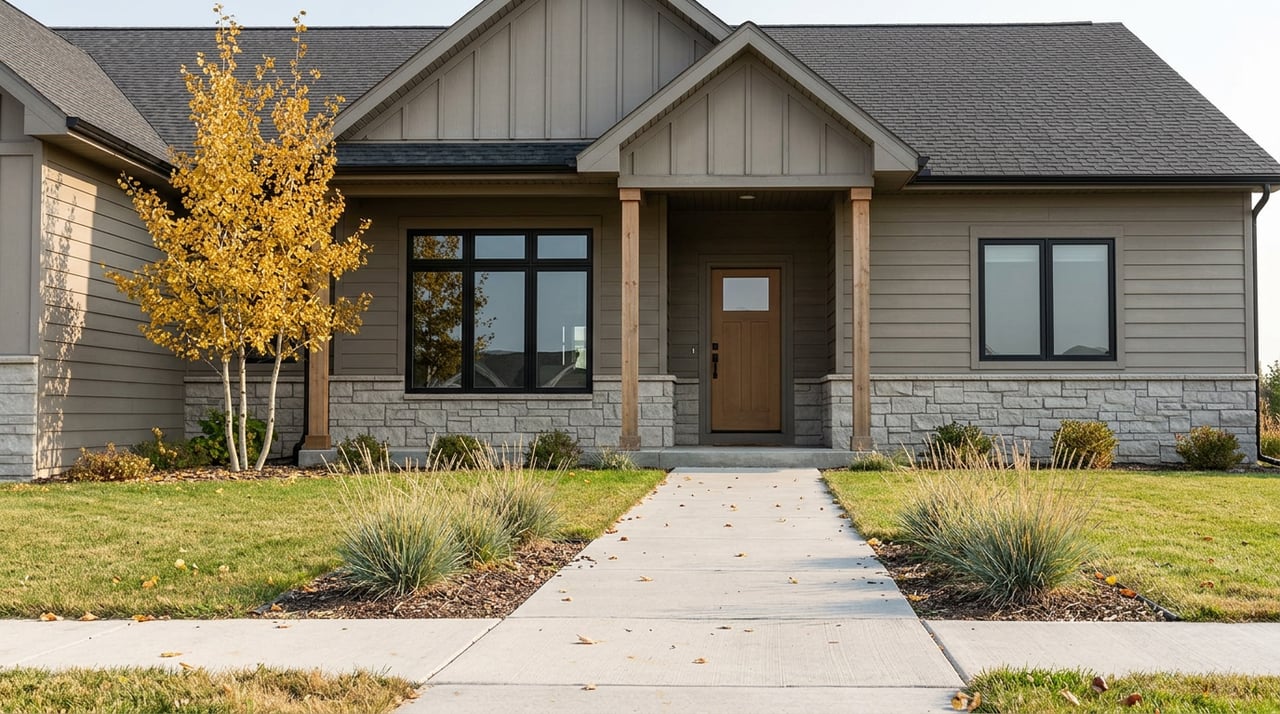
If the resale market is where the squeeze is tightest, new construction is where builders are actually adding units. Saddle Ridge, on Cheyenne's east side off Pershing Boulevard, has become the fastest-growing subdivision within city limits, with roughly 80 percent of the neighborhood carrying no HOA and direct access to the Cheyenne Greenway. Builders active there and in comparable east-side communities like The Reserve and Destin Heights include Ivey Construction Company LLC, Wyoming Development LLC, Mission Homes Wyoming, and CrowCreek Homes, with new construction typically starting around $440,000 and running past $560,000.
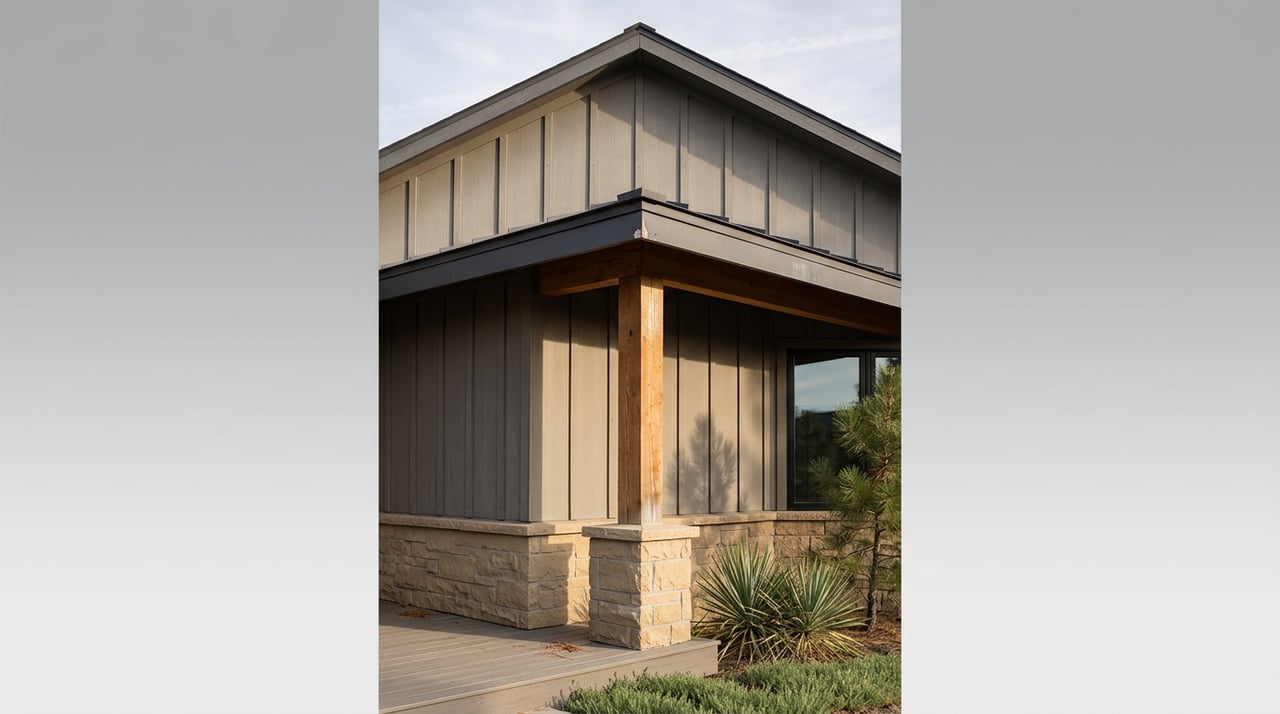
New builds also come with a practical edge for VA buyers: impact-resistant roofing and blown-in insulation built for Cheyenne's wind and hail exposure, which matters at 6,062 feet in a city that's among the windiest in the country. Older homes from the 1950s through the 1970s frequently draw VA appraiser flags on roofing, heating, and windows for exactly that reason, an issue that can slow a closing timeline if it surfaces mid-contract rather than during a pre-offer walkthrough.
What This Means If You're Weighing Orders or an Offer
The number that should drive your neighborhood decision this year isn't your BAH. It's how fast the specific pool you're buying into is turning over. A resale in the South Greeley Highway corridor might sell in under 30 days when it's priced right, while new construction in Saddle Ridge tends to move slower and leave more room to negotiate. Missile operations crews rotating through 24-hour alert tours and maintenance crews traveling to remote launch facilities across three states also means this isn't a 9-to-5 posting, which is worth factoring into how much you weigh commute time against everything else.
Get pre-approved before you tour. Anchor any offer to closed comps, not the asking price of whatever happens to be live that week. And if the resale corridors near Gate 5 feel like a bidding scrum, the east-side new construction communities are worth a serious look, since that's where the actual unit count is growing instead of just changing hands.
FAQ
Does a VA loan work any differently in a market this tight? The loan terms don't change, but timing does. Families who arrive without pre-approval and a clear neighborhood target sometimes end up renting for a year before finding something to buy, simply because there's so little active inventory to move on quickly.
Is new construction the safer bet right now? It carries a price premium over the median resale, but it comes with climate-specific building features and a slower sales pace that can leave more negotiating room than a resale in the tightest corridors.
How long will the Sentinel-related housing pressure last? Construction spending is already underway and is expected to continue for years, with first missile flight targeted for 2027 and full operational capability projected for the early 2030s, so this isn't a pressure that resolves itself in a single buying season.
Whether you're working from a set of PCS orders or an offer letter tied to the Sentinel build-out, the neighborhood decision in Cheyenne right now is really a supply decision. If you want a second set of eyes on where the actual inventory is moving before you tour, The Harvey Home Team knows this market by corridor, not just by median. Call me. Seriously.